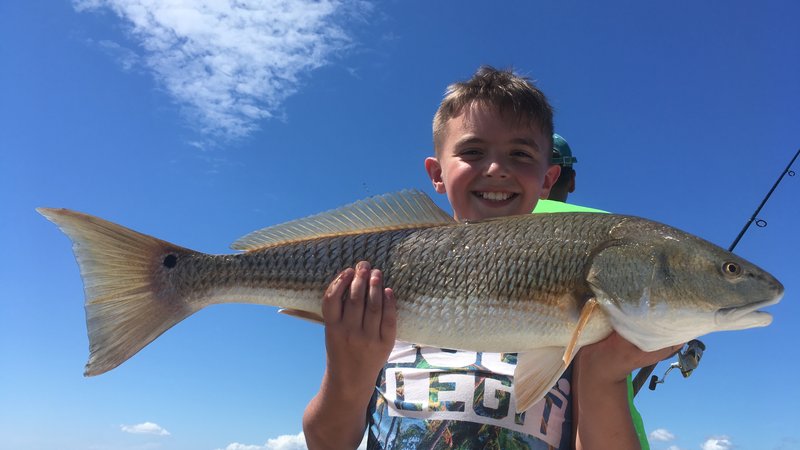
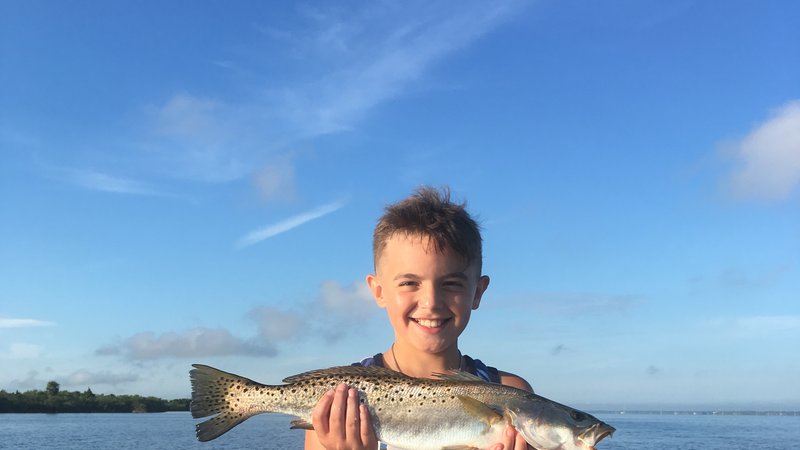
Inshore fishing here means poling shallow grass flats and mangrove shorelines, reading water for tailing fish rather than running offshore.
The Mosquito Lagoon is a shallow, grass-bottomed estuary that runs along New Smyrna Beach's western edge, protected from the Atlantic by a barrier island. Average depth across most of the fishable flats is under three feet, which is exactly what makes it a sight-fishing fishery — on a calm day with decent light, you can watch a redfish tail before you ever cast to it.
Most trips here are run with a push pole rather than a trolling motor. Quiet water means spooky fish, and the difference between a boat that poles in and one that motors in is often the difference between a shot at a fish and a wake disappearing across the flat.
We start by checking the tide stage against the spots that fish best on that movement — a falling tide pulls bait off the flats into creek mouths, a rising tide pushes fish up onto the grass. The whole day is planned around that, not a fixed route.
Light spinning tackle, mostly sight-casting in water often under two feet deep. Some days it's fly-fishing-clear; others it's reading nervous water and mud. Both are part of fishing this lagoon.

The signature species of the Mosquito Lagoon — tailing on shallow flats at low water, especially in winter months when the water is clearest.

Holding tight to mangrove edges and docks, snook fishing picks up as water temperatures climb into spring and summer, and shuts down when it gets cold.

Spotted seatrout over grass flats fill in the action between redfish and snook windows, and are usually the most reliable bite on a tough day.